
FEB 16: Europe Asserts Itself, U.S. Administration Backs Orbán, France Deepens India Ties, Ukraine Pushes Air Defense
Factual information is our love language.

MSC – DAY THREE
Europe at the Center
On the closing day of the Munich Security Conference 2026, Europe — its unity, its identity, and its future role in the global order — moved unmistakably to the center of debate.
The tone was less about immediate battlefield developments and more about the political architecture of the next generation: shared values, economic resilience, deterrence, and the meaning of freedom.
EUROPEAN UNION
EU High Representative for Foreign Affairs Kaja Kallas used the final day to respond directly to recent criticism of Europe’s political direction.
Responding to U.S. Secretary of State Marco Rubio’s remarks about “woke” Europe, she stated:
“Contrary to what some may say, woke, decadent Europe is not facing civilizational erasure…”
She continued:
“In fact, people still want to join our club, and not just fellow Europeans. When I was in Canada last year, I was told that over 40% of Canadians have an interest in joining the EU so the waiting list is quite long.”
The message was clear: European integration remains attractive globally, even amid internal pressures and geopolitical turbulence.
UNITED KINGDOM
UK Defence Secretary John Healey announced expanded military cooperation with France, Germany, and Italy to deliver long-range precision and hypersonic weapons — capabilities central to NATO deterrence strategy.
Ahead of MSC, Healey hosted the Ukraine Defense Contact Group at NATO headquarters and confirmed a £500 million air defense package for Ukraine, including the UK’s first contribution to PURL (Procurement of Ukraine’s Requirements for Air Defense Missiles).
The UK positioned itself as both operationally committed and strategically aligned with continental defense scaling.
POLAND
Polish Foreign Minister Radosław Sikorski delivered one of the sharpest historical reminders of the conference:
“As you know, Russia, the USA, and Great Britain guaranteed the security of Ukraine and its borders. In exchange for Ukraine giving up what was then the third largest arsenal of nuclear weapons in the world. In 1994. So you have an obligation to Ukraine to help them defend their freedom.”
The reference to the 1994 Budapest Memorandum framed the current war not just as aggression — but as a broken security guarantee.
On freedom of speech, Sikorski emphasized civilizational nuance:
“In the United States, freedom of speech is nearly absolute. Winning a defamation or libel case there is extremely difficult.
In Europe, however, for important historical reasons, for example in Poland, the public promotion of fascism and communism is prohibited.
We believe in freedom of speech combined with responsibility.”
His intervention underscored a widening transatlantic debate over democratic values and legal culture.
CZECHIA
Czech President Petr Pavel offered blunt realism on Russia:
“What we probably need in Europe is what I would call more of a Scandinavian spirit.”
And more starkly:
“Russia is a weak country with a lot of nuclear weapons, and we should approach it that way.”
His framing echoed a recurring theme across MSC: deterrence without illusions.
POST-MSC DEVELOPMENTS
FRANCE–INDIA
President Emmanuel Macron arrived in Mumbai for a three-day visit focused on defense cooperation and artificial intelligence.
He posted:
“On the way to India!
Three days from Bombay to New Delhi to go even further in our strategic partnership…
Together we will go even further in our cooperation. See you tomorrow, my dear friend Narendra Modi!”
Strategic autonomy and Indo-Pacific alignment continue to be core pillars of France’s global positioning.
CANADA
Prime Minister Mark Carney announced several significant defense and trade steps following Munich:
Appointment of the Honourable Janice Charette as Chief Trade Negotiator to the U.S.
Continued advancement of the proposed Defence, Security & Resilience (DSR) Bank
Plans to increase procurement from Canadian defense suppliers and reduce dependence on American firms
Canada becoming the first non-European country granted membership in SAFE (Security Action for Europe)
Carney described SAFE as:
“A gamechanger program that means Canada can rearm our Canadian Armed Forces members more effectively and scale up our defence industries with more contracts overseas.”
He also spoke with UK Prime Minister Sir Keir Starmer to expand cooperation in digital trade, critical minerals, sovereign AI infrastructure, and CPTPP-EU discussions.
RUBIO IN SLOVAKIA & HUNGARY
U.S. Secretary of State Marco Rubio ended a two-day trip to Slovakia and Hungary focused on nuclear cooperation and regional energy security following the Munich Security Conference.
In Budapest, Rubio signed a U.S.–Hungary Civil Nuclear Intergovernmental Agreement and supported expanded use of U.S. nuclear reactor technology.
The visit also came amid continued U.S. flexibility on sanctions enforcement affecting Hungary’s energy arrangements with Russia. When asked about Hungary’s continued purchases of Russian gas and related sanctions waivers, Rubio framed the issue in pragmatic terms — arguing that governments act in their national interest.
He compared Hungary’s energy strategy to the United States’ own “America First” approach, suggesting that securing affordable and stable energy supply is a sovereign decision.
Hungarian Prime Minister Viktor Orbán, facing parliamentary elections on April 12, announced he will meet President Trump in Washington this Thursday.
“Significant changes can take place in three or four days.”
Rubio also publicly emphasized the strength of U.S.–Hungarian ties and linked Hungary’s success to American interests.
On Ukraine, Rubio defended the administration’s diplomatic efforts:
“Usually when a President tries to engage himself in peacemaking… that’s applauded. This is one of the few times when people criticize a President trying to end a war.”
ONEST Take: Rubio’s visit signals that Washington is not just engaging Central Europe — it is actively reinforcing leaders aligned with its political and geopolitical vision ahead of key elections, potentially reshaping internal EU dynamics.
UKRAINE
President Volodymyr Zelenskyy warned:
“Intelligence reports that the Russians are preparing new massive strikes on energy, and air defense must be configured properly. Any delay in supplying air defense missiles works for scaling up the damage.”
He imposed sanctions on ten Russian athletes supporting aggression and stated:
“This Ukrainian sanctions package should be a signal to others around the world – a signal that one cannot simply turn a blind eye to support for aggression.”
In Kyiv, Zelenskyy met with U.S. Senators Richard Blumenthal and Sheldon Whitehouse, pushing for stronger sanctions targeting Russian nuclear energy and tanker fleets:
“The number one tool is sanctions policy.”
GENEVA TALKS
Kremlin spokesperson Dmitry Peskov confirmed Russia will demand territorial concessions during Geneva talks.
Ukraine’s delegation, led by Rustem Umerov, stated:
“We expect constructive engagement and substantive meetings on security and humanitarian issues in order to move toward a dignified and lasting peace.”
The gap in framing — territorial demands versus “dignified peace” — remains profound.
CALIFORNIA–UK CLEAN ENERGY DEAL
UK Energy Secretary Ed Miliband welcomed California Governor Gavin Newsom to London to sign a clean energy agreement focused on investment cooperation and technology sharing.
The MOU does not specify funding amounts or quantified GDP impact but aims to facilitate joint climate investment.
President Donald Trump criticized the agreement, calling Newsom’s environmental policies a “disaster.”
UNITED STATES
A federal judge ordered restoration of historical slavery acknowledgments removed by the National Park Service in Philadelphia.
U.S. embassies are raising funds for July 4 celebrations marking the 250th anniversary of independence.
FDA reviewing petitions regarding processed refined carbohydrates.
Fact-check: While the President conducts foreign policy, courts can review executive actions for constitutional or statutory violations.
IRAN
President Trump said he would be involved “indirectly” in nuclear talks with Iran set to begin in Geneva and reiterated that Israel would be supported if diplomacy fails.
INDO-PACIFIC
Japanese Defense Minister Shinjirō Koizumi warned:
“The weaponization of economy, technology, resources, information, and cyberspace… The boundary lines between peacetime and contingency… are no longer clearly visible.”
He described an era where “anything could happen tomorrow.”
HUMANITARIAN
Madagascar cyclones leave 400,000 in need of food assistance.
Over 720 million people faced hunger last year.
UN Secretary-General António Guterres condemned renewed land registration in parts of the West Bank.
KINDNESS

Punch-kun, a six-month-old snow monkey rejected by his mother, was raised by zookeepers and given a stuffed monkey toy — which he now carries everywhere.
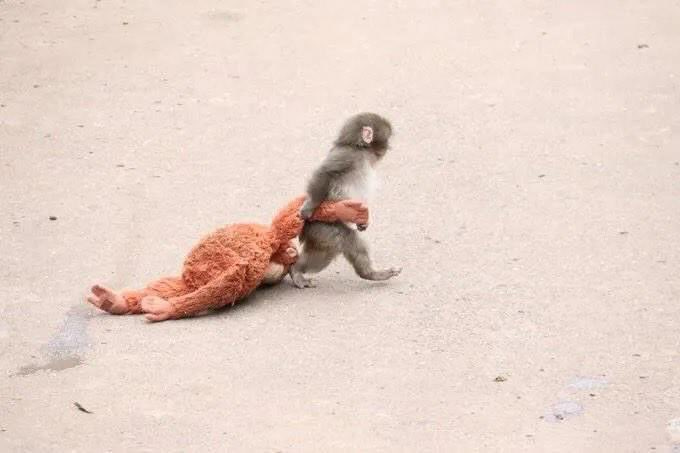
At first, he was rejected by the troop..
..yet he is now slowly being accepted, groomed, and embraced by older monkeys.
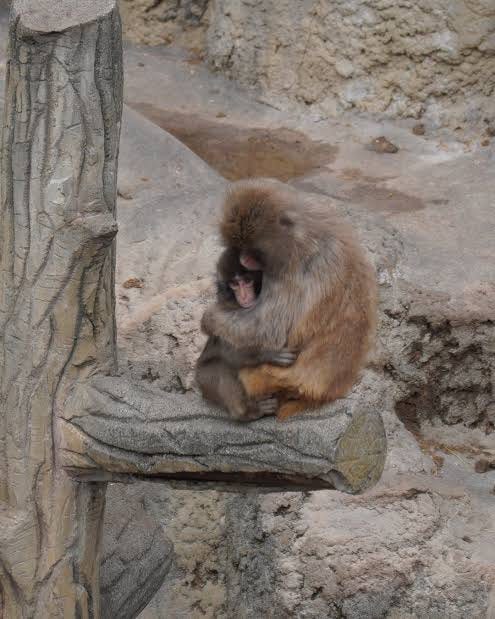
Be happy, Punch.
Stay informed. Stay human. Stay ONEST.
(c) ONEST Network 2026 — Facts First. Clarity Always.